Keynote Speakers
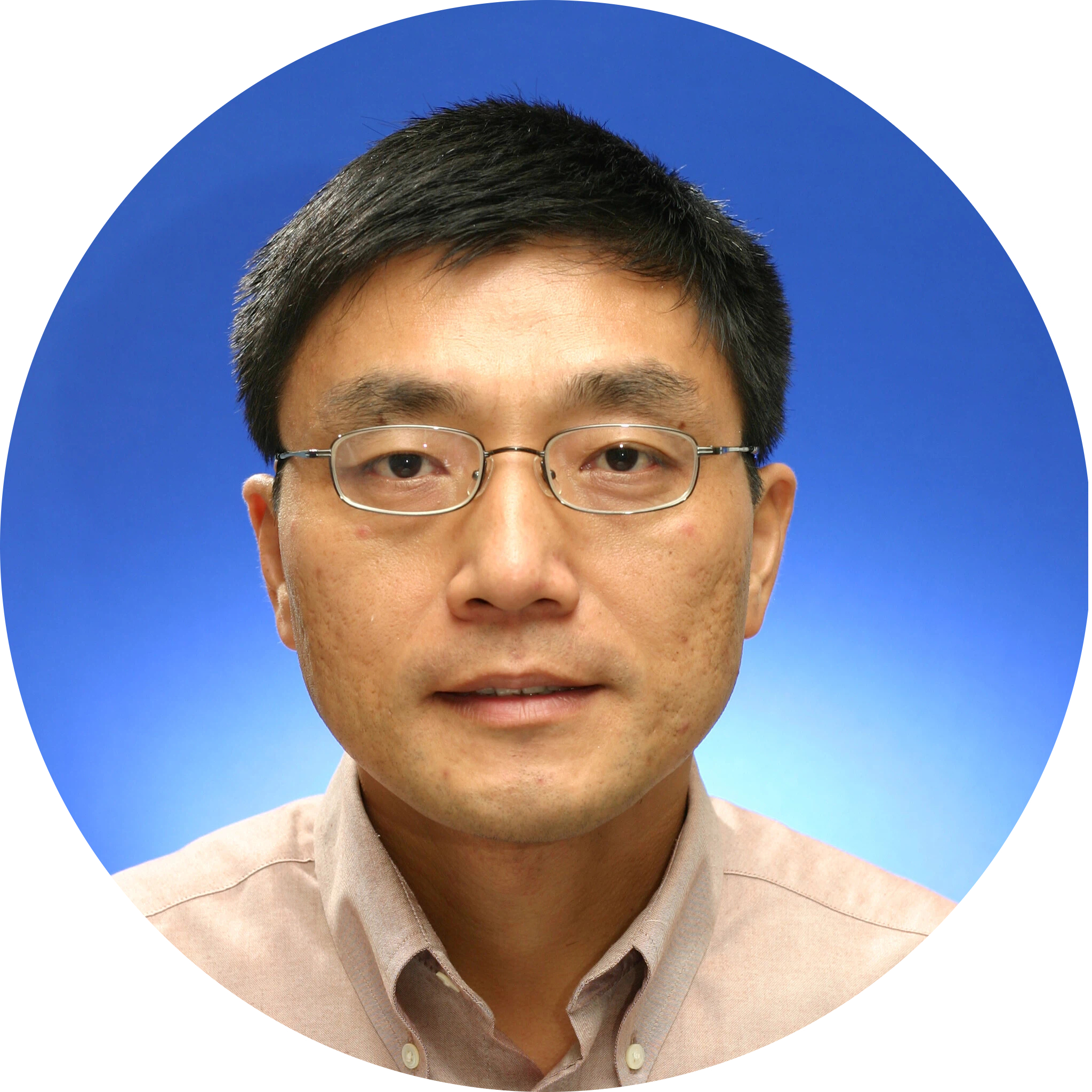 Prof. Weisi Lin (IEEE/IET Fellow)
Nanyang Technological University, Singapore
Bio: Lin Weisi is an active
researcher in image processing,
perception-based signal modelling and
assessment, video compression, and
multimedia communication. He had been the
Lab Head, Visual Processing, Institute for
Infocomm Research (I2R), Singapore. He is
currently a President’s Chair Professor in
College of Computing and Data Science,
Nanyang Technological University (NTU),
Singapore, where he also serves as the
Associate Dean (Research). He is a Fellow of
IEEE and IET. He has been awarded Highly
Cited Researcher since 2019 by Clarivate
Analytics, and elected for the Research
Award 2023, College of Engineering, NTU. He
has been a Distinguished Lecturer in both
IEEE Circuits and Systems Society (2016-17)
and Asia-Pacific Signal and Information
Processing Association (2012-13), and an
Associate Editor for IEEE Trans. Neural
Networks Learn. Syst., IEEE Trans. Image
Process., IEEE Trans. Circuits Syst. Video
Technol., IEEE Trans. Multim., and IEEE Sig.
Process. Lett., as well as a Senior Editor
for IEEE J. Selected Topics in Sig. Process.
He serves as a General Co-Chair for IEEE
ICME 2025 and the Lead General Chair for
IEEE ICIP 2027, and has been a TP Chair for
several international conferences. He has
led the Temasek Foundation Programme for AI
Research, Education & Innovation in Asia,
2020-2024, and co-led the Foundational
Research Capabilities (FRC) Study
(2025-2027) on Augmented Reality and
Industrial Metaverse, NRF, Singapore. He
believes that good theory is practical and
has delivered 10+ major systems for
industrial deployment with the technology
developed.
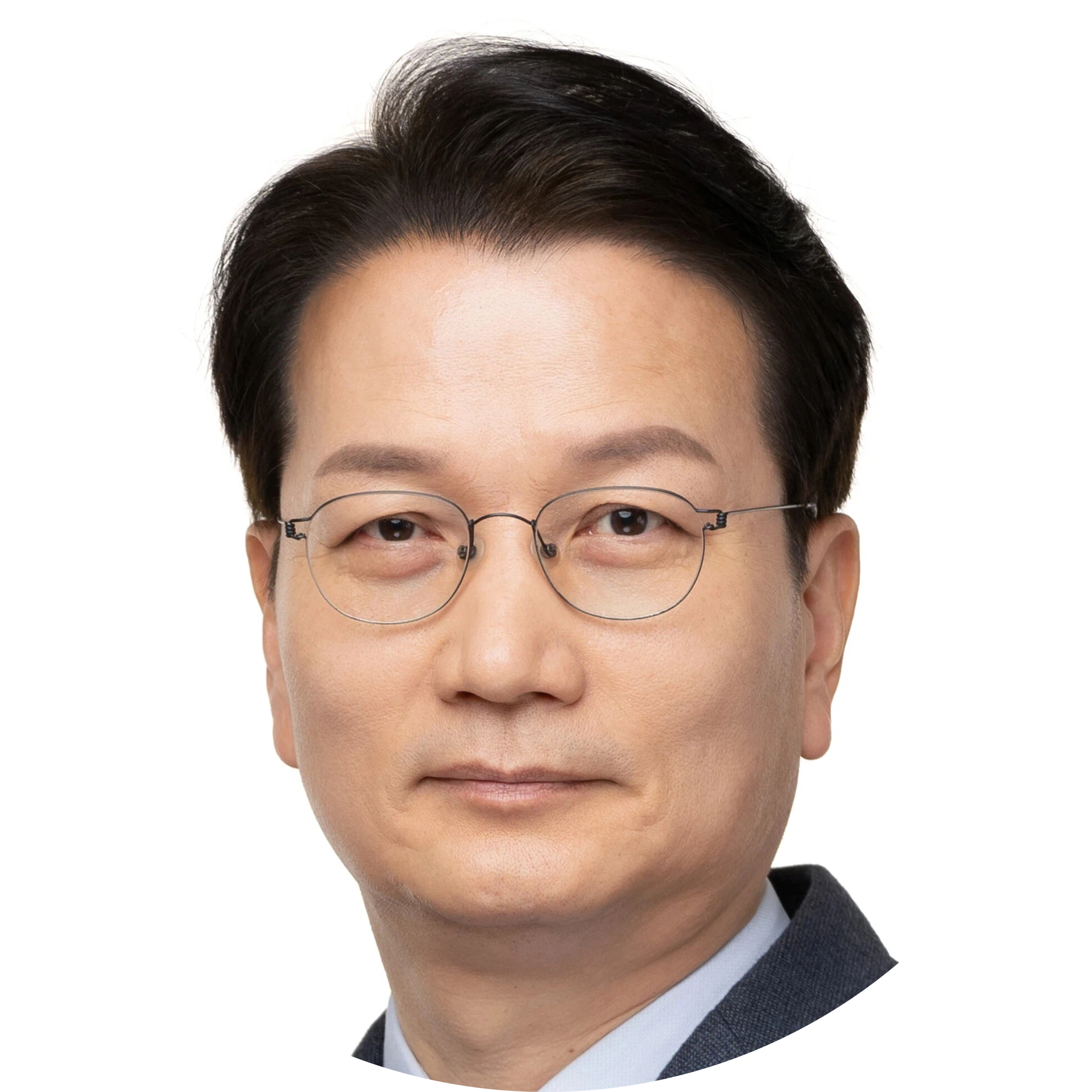 Prof. Sung-Bae Cho (IEEE/AAIA Fellow, Korean Academy of Science and Technology (KAST ), National Academy of Engineering of Korea (NAEK))
Yonsei University, South Korea
Bio: Sung-Bae Cho received Ph.D.
degree in computer science from KAIST (Korea
Advanced Institute of Science and
Technology), Taejeon, Korea. He was an
invited researcher of Human Information
Processing research laboratories at ATR
(Advanced Telecommunications Research)
institute, Kyoto, Japan from 1993 to 1995,
and a visiting scholar at University of New
South Wales, Canberra, Australia in 1998. He
was also a visiting professor at University
of British Columbia, Vancouver, Canada from
2005 to 2006, and at King Mongkut’s
University of Technology at Thonburi,
Bangkok, Thailand in 2013. Since 1995, he
has been a professor in Department of
Computer Science, Yonsei University, a
Underwood distinguished professor from 2021,
and a Yonsei Fellow from 2023. His research
interests include neural networks, pattern
recognition, intelligent man-machine
interfaces, evolutionary computation, and
artificial life. Dr. Cho was the recipient
of the Richard E. Merwin prize from IEEE
Computer Society in 1993. He received
several distinguished investigator awards
from Korea Information Science Society in
2005, and Gaheon Sindoricoh in 2017. He is
also a recipient of service merit medal from
Korean government in 2022. Currently he is
the Fellow of IEEE, AAIA, KAST (Korean
Academy of Science and Technology) and NAEK
(National Academy of Engineering of Korea).
 Prof. Cathal Gurrin
Dublin City University, Ireland
Bio: Cathal Gurrin is a Full Professor in the School of Computing at Dublin City University (DCU), where he serves as Deputy Director and DCU Institutional Lead of the national ADAPT Centre for Digital Content Technologies, as well as Assistant Head of School for International Engagement. His research lies at the intersection of artificial intelligence, multimedia information retrieval, cognitive science, and digital health, with a particular focus on lifelogging and the development of AI technologies that transform multimodal personal data into rich, searchable digital memories and intelligent tools for healthcare, wellbeing, and human augmentation. He is internationally recognised as a pioneer in lifelogging research and his work has helped establish lifelogging as a standalone research area within the multimedia and information retrieval communities. He has published extensively in leading international venues, secured significant competitive research funding, and regularly serves in leadership roles across major international research initiatives and conferences. He founded and co-organises the ACM Lifelog Search Challenge (LSC), the NTCIR Lifelog Task, and the annual Video Browser Showdown at the MMM conference, three flagship international benchmarking initiatives that have significantly advanced interactive multimedia retrieval and AI-assisted search. He has held leading organisational roles for many of the world’s premier computer science conferences, including General Co-Chair of ACM ICMR 2020, ECIR 2023, and ACM Multimedia 2025, and will serve as General Co-Chair of The ACM Web Conference (WebConf) 2027. In recognition of his contributions to Ireland’s international research profile and conference sector, he was named Fáilte Ireland Conference Ambassador of the Year 2025.